

Nuart Aberdeen is set to return to the city from 22–26 April 2026. It brings another programme of artists. All working across walls, streets and the public space. Over the years the festival has built a reputation for pushing beyond traditional muralism. Often it challenges expectations around what street art can be and how it can be experienced.
Under the theme “Poetry is in the Streets”, the 2026 edition moves away from the dominance of large-scale murals. Instead it leans into something more immediate and accessible. Text, language and small-scale interventions take centre stage. All reflecting a return to some of the core principles of street art culture.

Poetry is in the Streets
The theme itself draws on a phrase associated with the 1968 student uprisings in Paris — “La poésie est dans la rue”. It’s a sentiment that feels particularly relevant to the direction Nuart is taking this year.
Rather than focusing purely on monumental works, the festival is exploring forms of expression that exist at a more human scale. Stencils, paste-ups, text-based pieces and interventions are positioned not just as supporting elements, but as central to the programme.

There’s an underlying idea here around accessibility. Large murals, by their nature, require significant resources and infrastructure. Smaller works, on the other hand, are something that can be created with relatively little. Sometimes with no more than an idea, some basic materials and a willingness to put something out there.
Artists announced for Nuart Aberdeen 2026
As ever, the festival brings together a mix of international and UK-based artists, alongside a strong Scottish presence running throughout the programme.
Text, poetry and language-led practices
A number of artists this year are working directly with text and language in public space, reflecting the festival’s core theme.

Robert Montgomery | @robertmontgomeryghost – is known for his poetic text-based works, often presented through billboards, light installations and public interventions. They bring a reflective tone to the street.
The Writing Is On The Wall | @thewritingisonthewall.art – places words directly onto the street through paste-ups and interventions, embracing the immediacy and impermanence of public expression.
V2k | @v2k_art – combines stencil work with text, often exploring socio-political themes and questions around power and perception.
Ciarán Glöbel | @ciaranglobel – incorporates traditional sign painting and hand-lettered typography into contemporary street contexts, bridging craft and urban culture.


Mural, figurative and painterly practices
While the 2026 theme leans toward text, a number of artists continue to explore visual approaches to wall-based work.

Remi Rough | @remirough – a key figure in post-graffiti, creates precise abstract works defined by geometry, rhythm and colour.
James Klinge | @jamesklinge_art – uses hand-cut stencils to produce detailed figurative pieces, often drawing on historical and contemporary references.
Molly Hankinson | @mollyhankinson.studio – explores ideas of space, safety and perception through expressive works that shift between figuration and abstraction.
KMG | @kmgyeah – draws on Celtic folklore and cultural identity, translating these narratives into visually rich works rooted in storytelling.
Hicks | @ed_hicks – brings a more contemplative approach, referencing Romantic landscape traditions while exploring themes of mythology, belief and transformation.


Conceptual, site-specific and intervention-based work
Expanding beyond the wall, several artists engage directly with the city as a space for interaction and critique.

Alisa Oleva (UK) | @alisaoleva – creates walking-based works that explore movement, participation and how people experience urban space.
Dr.d (Subvertiser) | @subvertiser_ – reworks advertising using a cut-and-paste aesthetic, challenging media narratives and power structures in public space.
Trackie McLeod | @trackiemcloeod – explores masculinity, class and popular culture through a multidisciplinary practice rooted in everyday Scottish life.
The Rebel Bear | @the.rebel.bear – uses street art to comment on politics, emotion and the absurdities of modern life, often with a direct and playful edge.


What to expect
With its focus on poetry and text-based work, Nuart Aberdeen 2026 is likely to feel different from previous editions. While large murals will no doubt still play a role, the emphasis seems to be on smaller, more immediate interventions spread throughout the city.
That shift may well encourage a more intimate way of experiencing the festival. One where attention is paid not just to the obvious, but to the details that might otherwise be missed.
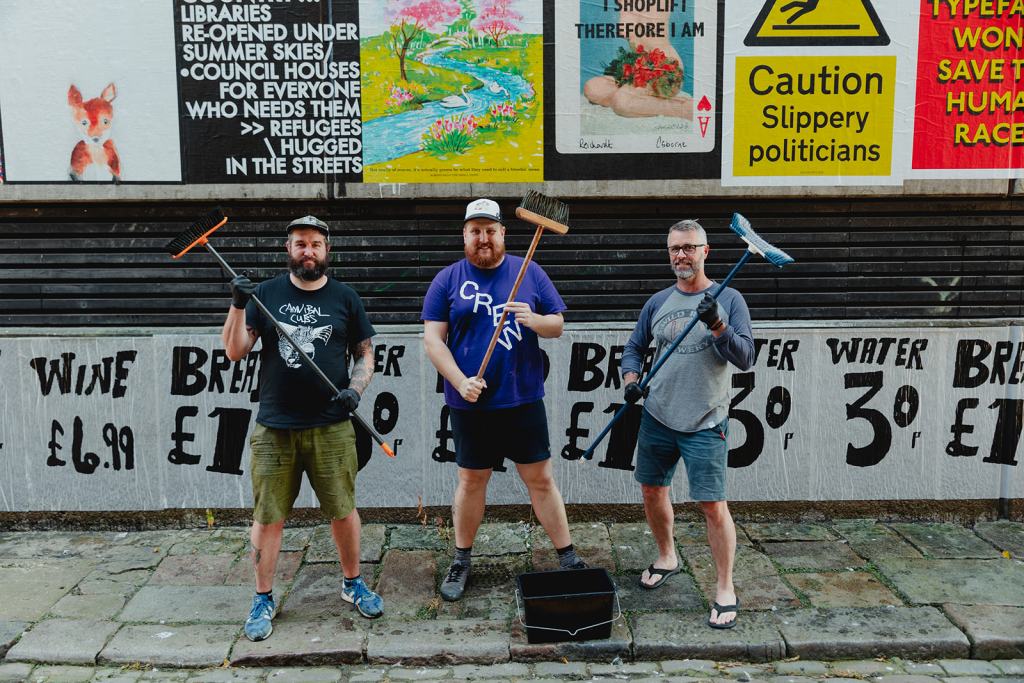
Poetry in the Streets
Nuart has always positioned itself as more than just a street art festival, and this year’s theme reinforces that. By focusing on language, participation and accessibility, Poetry is in the Streets looks set to explore some of the more fundamental ideas behind why art appears in public space at all.
It’s a direction that feels both reflective and forward-looking. It will be interesting to see how it plays out across Aberdeen when the festival returns in April.
Festival Information
Nuart Aberdeen 2026
22–26 April 2026
Aberdeen, Scotland
Nuart Aberdeen returns with the theme “Poetry is in the Streets”, focusing on text-based works, interventions and more accessible forms of street art across the city.
Further information:
Visit official website
Follow updates:
@nuartfestival
@nuartaberdeen
For other Inspiring City articles you will like, take a look at…
- Nuart Aberdeen 2024: All the Murals and Street Art
- Murals of the Nuart Aberdeen Street Art Festival in 2023
- All the Murals from Nuart Aberdeen Festival 2022
- Where to Find Street Art in Aberdeen
Discover more from Inspiring City
Subscribe to get the latest posts sent to your email.

1 Comment